How Fermentile processes your batch data
Five analytical modules operating on the data your DCS historian, LIMS, and batch record systems already generate. No new data entry. No infrastructure changes.
A data correlation layer on top of your existing stack
Fermentile is not a data capture system. It is an analytics layer that reads from your process historian, LIMS, and MES, correlates events across those data sources, and applies statistical process control logic to flag and classify deviations. The platform maintains a time-indexed batch object for each registered bioreactor run, enabling historical comparison at any point in a batch lifecycle. Engineers continue to use their existing data systems; Fermentile adds the investigation and compliance output layer that those systems do not provide.
What each module does
Each module addresses a specific step in the deviation management workflow, from initial detection through audit-ready documentation.
Deviation Classifier
Automated classification against site-specific SPC limits
Applies your site's control strategy to incoming real-time batch data. When a parameter exceeds a control limit, the classifier creates a deviation record automatically: event type, affected parameter, excursion magnitude, and batch context. Classification is consistent across shifts and engineers.
Batch Comparison Engine
Overlay against ten most comparable historical runs
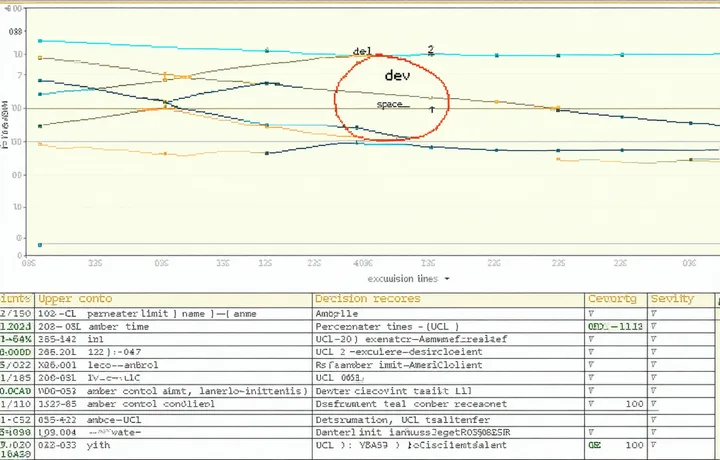
Fermentile identifies the ten most similar historical batches based on product, scale, inoculum source, and initial conditions. Overlaid trend plots show where the current run departs from the historical envelope — the divergence point is the investigation starting point.
Process Trend Monitor
Real-time parameter visualization with SPC boundaries
Live trend view for all active bioreactor runs. Parameters displayed against alert and action limits derived from the site's historical batch population. Supports the MSAT engineer's need to monitor multiple concurrent runs without switching between historian interfaces.
Root-Cause Workbench
4-hour pre-excursion window correlation across all data streams
Scans the pre-excursion window for co-occurring changes: equipment state transitions, raw material lot starts, operator interventions, environmental readings, and upstream parameter deviations. Each candidate root cause is ranked by temporal proximity and historical correlation.
Audit Trail Builder
One-click investigation package with electronic signature manifest
Assembles the complete investigation package: timeline, batch comparison charts, root-cause analysis, CAPA record, and investigator signatures. Output is a timestamped PDF with an electronic signature manifest designed to support 21 CFR Part 11 electronic records requirements.
CPV Dashboard
Continuous process verification across the full batch population
Maintains a rolling CPV view for each registered process: control charts, capability indices (Cpk, Ppk), and trend alerts for gradual drift. Generates a compliant CPV report from current data when a regulatory inspection requests it — not from a spreadsheet last updated three months ago.
The batch object: how Fermentile organizes process data
Time-indexed batch object
Each bioreactor run is registered as a batch object with a unique identifier, product, scale, inoculum, and process phase. All parameter data, events, and deviations are indexed to the batch timeline rather than wall-clock time — enabling comparison across runs of different absolute durations.
Site-specific control limits
Alert limits and action limits are not generic thresholds — they are derived from the site's historical batch population for each process. The SPC engine calculates control limits from your historical data and applies them to incoming trend data. Limits are versioned and audit-trailed.
Cross-source event correlation
Fermentile maintains a unified event stream for each batch: DCS state changes, LIMS sample results, MES batch record events, and operator log entries. The root-cause workbench queries this unified stream, eliminating the need to manually correlate events across separate system exports.
Structured investigation objects
Each deviation event generates a structured investigation object with linked data evidence, root-cause candidates, engineer notes, CAPA records, and approval workflow. The object is the source of truth for the investigation — not a separate document assembled after the fact.
How Fermentile deploys in your environment
Hosted on Fermentile infrastructure
Data is transmitted from your site's historian via encrypted API connection. Suitable for organizations with cloud data transfer policies that permit process data to leave the site network. Fastest deployment path — typical integration in 2–4 weeks.
- SOC 2-aligned infrastructure
- Data encrypted in transit and at rest
- Role-based access controls
Deployed within your site network
Fermentile is deployed as a containerized service within your site network — no process data leaves the site boundary. Suitable for organizations with strict data residency requirements. Requires a Linux server or VM within the historian network segment.
- No data egress requirement
- Compatible with air-gapped environments
- Updates delivered via validated change package
See the platform against your batch data
A pilot runs on a single process or batch family from your site. Typical integration: 2–4 weeks.
Request a Pilot