What the analysis produces
MSAT teams evaluate tools by the investigation outputs they generate. This page describes Fermentile's analytical outputs and the workflow decisions each output supports.
The investigation view the data already supports
Every piece of data needed to classify and investigate a bioreactor deviation exists in your site's DCS, LIMS, and batch records within the first hour of the excursion. The problem is not a data availability problem — it is a data correlation problem. Fermentile's analytics engine correlates what is already there and presents it as a coherent investigation view.
The deviation classification logic uses your site's historical batch population to derive site-specific SPC limits. A limit appropriate for a 200L mammalian CHO process at one site is not automatically appropriate for a 500L microbial E. coli fermentation at another.
Batch comparison: the divergence point is the starting point
Overlay any batch against its ten most comparable historical runs
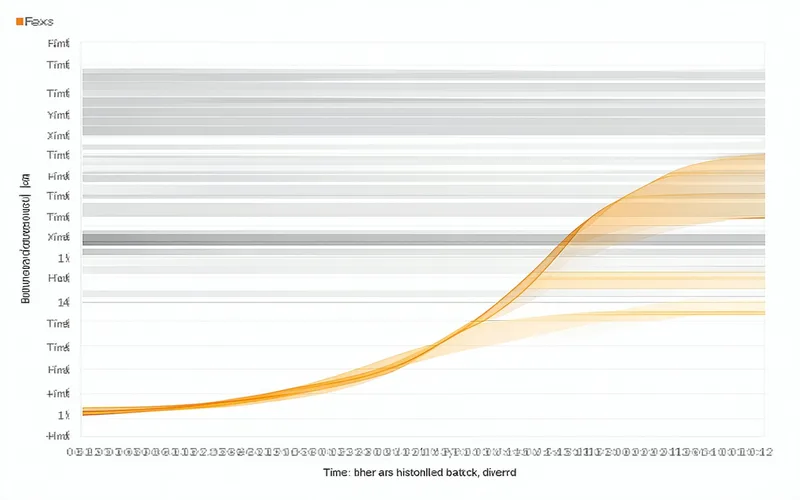
When a deviation occurs at hour 36, the question is not what happened at hour 36 but when did this run start to diverge from good batches. The batch comparison view overlays the current run against ten similar historical batches matched by product, scale, inoculum source, and initial conditions. The divergence point — which may be 6 to 12 hours before the excursion — is where the investigation should start.
Trend monitoring: SPC limits from your batch population
The process trend monitor maintains a live view of all active bioreactor runs against applicable SPC limits derived from the site's historical batch population for each process and parameter. When a parameter approaches an alert limit, the system flags the batch. When it exceeds an action limit, a deviation record is opened automatically. Engineers do not miss excursions because they were in another building or monitoring a different run.
Root-cause workbench: the 4-hour pre-excursion window
The root cause of a bioreactor excursion is almost always visible in the process data in the 4 hours before onset. The workbench scans that window across all available data streams and surfaces candidate root causes ranked by temporal proximity and historical correlation. Candidate types include equipment state transitions, raw material lot changes, operator interventions, upstream parameter deviations, and environmental readings.
CPV dashboard: process capability from the full batch population
Continuous process verification is a regulatory expectation for commercial biologics, not a quarterly spreadsheet exercise.
Fermentile maintains a rolling CPV view for each registered process: control charts, Cpk and Ppk capability indices, and trend alerts for gradual drift. When a regulatory inspection requests CPV data, the dashboard generates a compliant report from current data. CPV is also the early-warning mechanism for process drift that does not trigger individual deviation events — a parameter drifting toward a control limit over 15 batches is invisible in single-batch monitoring; the CPV chart makes it visible before it becomes a deviation investigation.
See the analytics against your batch data
A pilot validates deviation classification and batch comparison against your site's historical batch population.
Request a Pilot